The Heath Brothers is a jazz group, formed in 1975 in Philadelphia, Pennsylvania, by the brothers Jimmy (tenor saxophone), Percy (bass), and Albert "Tootie" Heath (drums); and pianist Stanley Cowell. Tony Purrone (guitar) and Jimmy's son Mtume (percussion) joined the group later. Tootie left in 1978, and was replaced by Akira Tana for a short period before returning in 1982. They also added other sidemen for some of their recording dates.
The group still exists with just two of the brothers, Jimmy and Tootie, and additional sidemen as needed.
The DVD, Brotherly Jazz: The Heath Brothers, recorded in 2004, shortly before Percy Heath's death, was one of the last times the three brothers played together, and chronicled the Heath Brothers' personal lives as well as socio-political issues many jazz musicians dealt with in the later 20th century, including jail, drugs, discrimination and segregation.
The 2009 CD Endurance was the first without Percy, and features seven original numbers by Jimmy, including "From a Lonely Bass", composed in memory of his late brother.
The Master Class: Heath Brothers Performance
The 4th Master class in the fall series featured two of the incredible Heath Brothers, Percy and Jimmy. The third brother Albert was not attending that day. Coming from a musical family and known as one of the first families of jazz, the Philadelphia brothers are known for their impeccable compositions,
arrangements and love of bebop. Each brother became musically successful in their own right and played with many of the bebop pioneers such as the Dizzy Gillespie Big Band. The rhythm section became known as the famous Modern Jazz Quartet after Percy succeeded Ray Brown, launching a 43 year career. Jimmy also played with Gillespie, exchanging his alto sax for a tenor and is a talented composer-arranger. Throughout the master class, you can sense the love of music the brothers have to this day.
Master Class: Percy Heath Backstage Interview
Jimmy Heath: Why Ben Webster Learned the Lyrics - JazzTimes Before and After
Violinist Regina Carter is a highly original soloist whose sophisticated technique and rich, lush tone took the jazz world by pleasant surprise when she arrived in New York from her native Detroit. And jazz fans weren't the only people who heard that mercurial quality in her playing: artists as diverse as Faith Evans, Elliot Sharp, and Mary J. Blige have employed her talents on their recordings, as has filmmaker Ken Burns on his soundtrack for The Civil War. Add this to an extremely long list of jazzers who include Tom Harrell, Wynton Marsalis, and Oliver Lake.
Regina Carter Jazz Violin Playlist
Regina Carter (born August 6, 1966) is the cousin of famous jazz saxophonist James Carter.She was born in Detroit and was one of three children in her family. She began piano lessons at the age of two after playing a melody by ear for her brother's piano teacher. After she deliberately played the wrong ending note at a concert, the piano teacher suggested she take up the violin. She suggested that the Suzuki Method was more conducive to her creativity. Carter's mother enrolled her at the Detroit Community Music School when she was four years old and she began studying the violin. She still studied the piano, as well as tap and ballet.
As a teenager, she played in the youth division of the Detroit Symphony Orchestra. While at school, she was able to take master classes from Itzhak Perlman and Yehudi Menuhin.
Carter attended Cass Technical High School with a close friend, jazz singer Carla Cook, who introduced her to Ella Fitzgerald. In high school, Carter performed with the Detroit Civic Orchestra and played in a pop-funk group named Brainstorm. In addition to taking violin lessons, she also took viola, oboe, and choir lessons.
Carter was studying classical violin at the New England Conservatory of Music in Boston when she decided to switch to jazz, but the school did not have that as a program. She transferred to Oakland University in Rochester, Michigan. Here she studied jazz with Marcus Belgrave. Through Belgrave Carter was able to meet a lot of people active in the Detroit jazz scene, including Lyman Woodard. She graduated in 1985. After graduating, she taught strings in Detroit public schools. Needing a change of scene, she moved to Europe and spent two years in Germany. While making connections, she worked as a nanny for a German family and taught violin on a U.S. military base.
Regina Carter returned to Michigan to join the all-female jazz quartet Straight Ahead. After two recordings for the Atlantic label, Carter left the band in 1994 in search of a solo career. She had already been doing session work in the city and sought to make the move permanent. Carter found herself working with Max Roach, the String Trio of New York, and the Uptown String Quartet before recording her self-titled debut recording on Atlantic in 1995. Its mixture of R&B, pop, and jazz confused jazz fans and delighted pop critics. It sold well enough for her to record Something for Grace, which leaned in a jazz direction though it featured an R&B sheen in its production. Carter left Atlantic for Verve in 1998 and recorded two more outings under her own name, the last of which, Motor City Moments, is her finest session. In 2001, Carter recorded a duet session with Kenny Barron that has been universally acclaimed for its lyrical qualities and stunning range of dynamics and harmonic invention.
She has since released the classically influenced Paganini: After a Dream in 2003 and the American songbook album I'll Be Seeing You: A Sentimental Journey in 2006 as a tribute to her late mother.
She won a MacArthur Foundation Fellowship in September of that year. After much time spent touring and a sojourn in Africa, Carter emerged with Reverse Thread in 2010 on the E1 imprint. The album is comprised mainly of African folk tunes from countries as diverse as Mali, Uganda, and Senegal among others. Her sidemen on this recording include accordionists Will Holshouser and Gary Versace, guitarist Adam Rogers, acoustic bassist Chris Lightcap, electric bassist Mamadou Ba, kora master Yocouba Sissoko, and drummer Alvester Garnett. Using many of the same musicians, Carter furthered her exploration of earlier musics on Southern Comfort, which explored in detail as well as in concept the roots of American music. It was released in March of 2014.
Regina Carter Interview
Atlanta Jazz Festival Regina Carter Special class HD
Interview with Regina Carter at the Jackie Robinson Foundation Afternoon of Jazz 1996
Regina Carter Clip - Discussing her musical inspirations & practice
Eugene "Jug" Ammons also known as "The Boss", was an American jazz tenor saxophonist, and the son of boogie-woogie pianist Albert Ammons
Gene Ammons will make you FEEL
Gene Ammons, who had a huge and immediately recognizable and captivating tone on tenor, had the natural ability to take a tune and make it his own. He was a flexible and technically proficient player who could play in many musical idioms as well as being an incredible balladeer. He proved to be very much his own man, developing a distinctive, warm sound that nevertheless fitted well into the hard-edged playing of his colleagues. Some of his ballad renditions became hits and, despite two unfortunate interruptions in his career, Ammons remained a popular attraction for 25 years.
Born April 14, 1925 – July 23, 1974 in Chicago, Illinois, Ammons studied music with instructor Walter Dyett at DuSable High School. Ammons began to gain recognition while still at high school when in 1943, at the age of 18, he went on the road with trumpeter King Kolax's band. In 1944 he joined the band of Billy Eckstine (who bestowed on him the nickname "Jug" when straw hats ordered for the band did not fit), playing alongside Charlie Parker and later Dexter Gordon. Notable performances from this period include "Blowin' the Blues Away," featuring a saxophone duel between Ammons and Gordon. After 1947, when Eckstine became a solo performer, Ammons then led a group, including Miles Davis and Sonny Stitt, that performed at Chicago's Jumptown Club. In 1949 Ammons replaced Stan Getz as a member of Woody Herman's Second Herd, and then in 1950 formed a duet with Sonny Stitt.
Ammons had an ability to infuse originals and standards with preachy yet elegant clouds of sound, contributing to what became known as “soul jazz”. A pioneering tenor saxophonist in bebop jazz, cool school jazz, and, later, soul jazz, Gene “Jug” Ammons played alongside several of the bebop and postbop eras’ most noted players, including Charlie Parker, Dexter Gordon, John Coltrane, Art Blakey, Fats Navarro and Sonny Stitt to name a few. Ammons worked as a single throughout his career, recording frequently in settings ranging from quartets and organ combos to all-star jam sessions. Drug problems kept him in prison during much of 1958-1960 and, due to a particularly stiff sentence, 1962-1969.
When Ammons returned to the scene in 1969, he opened up his style a bit, including some of the emotional cries of the avant-garde while utilizing funky rhythm sections, but he was still able to battle Sonny Stitt on his own terms. Ironically, the last song that he ever recorded (just a short time before he was diagnosed with terminal cancer in 1974) was “Goodbye.” Gene Ammons - Canadian Sunset (Original LP Remastered) (Full Album)
Summer Horns feat. Dave Koz, Gerald Albright, Mindi Abair & Richard Elliot live at the Jakarta International Java Jazz Festival 2014, Saturday March 1st - A3 Hall JIExpo Kemayoran, Jakarta, Indonesia.
Definition: a term sometimes given to the music inspired by bebop but played by white musicians after World War II such as Gerry Mulligan, Lee Konitz, Lennie Tristano, and Warne Marsh. However, Miles Davis, with his album Birth of the Cool, helped spread the popularity of the style, which tended to be more subdued and cerebral than hard bop, a parallel post-bebop movement.
Billy Taylor Productions Presents Jimmy Owens, flugelhorn; Billy Taylor, piano; Chip Jackson, bass and Steve Johns on drums.
Streetwize - Smooth Playlist Bio by Wade Kergan
A smooth jazz studio supergroup led by saxophonist Kim Waters, Streetwize feature a roster including singer Maysa Leak and guitarist Ken Navarro. The idea of collaboration is nothing new to jazz -- smooth or otherwise -- the twist here is that Streetwize perform contemporary rap and R&B radio hits. Their first album, Streetwize: Smooth Urban Jazz, was released by Shanachie in 2002 and featured versions of Mystikal's "Shake It Fast," Aaliyah's "Rock the Boat," and D'Angelo's "Brown Sugar." A second album, Work It, appeared the next year with Kim Waters and company polishing the edges off tracks made popular by Missy Elliott, Erykah Badu, and Jennifer Lopez. In 2004, Streetwize delivered the sultry Slow Jamz featuring the Isley Brothers tributes "Don't Say Goodnight" and "Between the Sheets." Two years later, the band returned with Does Dre which included songs associate with rapper Dr. Dre such as Eminem's "My Name Is," Snoop Dogg's "Gin and Juice," and "Nuthin' But a G Thang." The band continued in the slow jam cover song vein with 2007's Sexy Love, 2008's Streetwize Does Mary J Blige, and 2009's Put U to Bed. In 2012, Streetwize released its eighth studio album, Feelin' Sexy, featuring covers of songs by Robin Thicke, R. Kelly, Frank Ocean, and others. Body Party followed in 2013 with versions of Ciara's song of the same title, Drake's "Hold On, We're Going Home," and Tamar Braxton's "The One."
John Coltrane represents the ultimate uncomprimising musician. An art not created for entertainment or commercial ambitions but rather a spiritual pursuit, a connection with the infinite. The last period before his death was marked by that search through some of the most explorative free jazz there is.
His Story click full screen
Merely mention the name John Coltrane and you’re likely to evoke a deeply emotional, often spiritual response from even the most casual jazz fan. John Coltrane was the most revolutionary and widely imitated saxophonist in jazz.
Born September 23, 1926 in Hamlet, North Carolina, John Coltrane was always surrounded by music.Coltrane grew up in High Point, North Carolina, his father played several instruments sparking Coltrane’s study of E-flat horn and clarinet. While in high school, (at about the age of 15) Coltrane’s musical influences shifted to the likes of Lester Young and Johnny Hodges prompting him to switch to alto saxophone. After moving to Philadelphia, he continued his musical training at Granoff Studios and the Ornstein School of Music. He was called to military service during WWII, where he performed in the U.S. Navy Band (1945-46) .
After the war,he played alto saxophone in the bands led by Joe Webb and King Kolax, then changed to the tenor to work with Eddie "Cleanhead" Vinson (1947-48). He performed on either instrument as circumstances demanded while in groups led by Jimmy Heath, Howard McGhee, Dizzy Gillespie (with whom he made his first recording in 1949), Earl Bostic, and lesser-known rhythm-and-blues musicians, but by the time of his membership in Johnny Hodges's septet (1953-54) he was firmly committed to the tenor instrument. Coltrane began playing tenor saxophone with the Eddie "CleanHead" Vinson Band, and was later quoted as saying, "A wider area of listening opened up for me. There were many things that people like Hawk, and Ben and Tab Smith were doing in the ‘40’s that I didn’t understand, but that I felt emotionally." Prior to joining the Dizzy Gillespie band, Coltrane performed with Jimmy Heath where his passion for experimentation began to take shape. However, it was his work with the Miles Davis Quintet with Red Garland, Paul Chambers, and Philly Joe Jones (1955-57) that would lead to his own musical evolution. " Miles music gave me plenty of freedom," he once said. During that period, he became known for using the three-on-one chord approach, and what has been called the ‘sheets of sound,’ a method of playing multiple notes at one time. John Coltrane - Playlist
Coltrane next played in Thelonious Monk's quartet (July-December 1957), but owing to contractual conflicts took part in only one early recording session of this legendary group. He rejoined Davis and worked in various quintets and sextets with Cannonball Adderley, Bill Evans, Chambers, Jones, and others (1958-60). While with Davis he discovered the soprano saxophone, purchasing his own instrument in February 1960.
Throughout the 1950s addiction to drugs and then alcoholism disrupted his career. Shortly after leaving Davis, however, he overcame these problems. Having led numerous studio sessions, established a reputation as a composer, and emerged as the leading tenor saxophonist in jazz, Coltrane was now prepared to form his own group; it made its debut at New York's Jazz Gallery in early May 1960. After briefly trying Steve Kuhn, Pete La Roca, and Billy Higgins, Coltrane hired two musicians who became longstanding members of his quartet, McCoy Tyner (1960-65) and Elvin Jones (1960-66); the third, Jimmy Garrison, joined in 1961. With these sidemen the quartet soon acquired an international following. At times Art Davis added a second double bass to the group; Eric Dolphy also served as an intermittent fifth member on bass clarinet, alto saxophone, and flute from 1961 to 1963,eventually adding players like Pharoah Sanders. The John Coltrane Quartet created some of the most innovative and expressive music in Jazz history including the hit albums: "My Favorite Things," "Africa Brass," " Impressions," " Giant Steps," and his monumental work "A Love Supreme" which attests to the power, glory, love, and greatness of God. Coltrane felt we must all make a conscious effort to effect positive change in the world, and that his music was an instrument to create positive thought patterns in the minds of people.
Coltrane turned to increasingly radical musical styles in the mid-1960s. These controversial experiments attracted large audiences, and by 1965 he was surprisingly affluent. From autumn 1965 his search for new sounds resulted in frequent changes of personnel in his group. New members included Pharoah Sanders, Alice Coltrane (his wife), Rashied Ali (a second drummer until Jones' departure), several drummers as seconds to Ali, and a number of African-influenced percussionists. In his final years and after his death, Coltrane acquired an almost saintly reputation among listeners and fellow musicians for his energetic and selfless support of young avant-garde performers, his passionate religious convictions, his peaceful demeanor, and his obsessive striving for a musical ideal.
In 1967, liver disease took Coltrane’s life leaving many to wonder what might have been. Yet decades after his departure his music can be heard in motion pictures, on television and radio. Recent film projects that have made references to Coltrane’s artistry in dialogue or musical compositions include, "Mr. Holland’s Opus", "The General’s Daughter", "Malcolm X", "Mo Better Blues", "Jerry McGuire", "White Night", "The Last Graduation", "Come Unto Thee", "Eyes On The Prize II" and "Four Little Girls". Also, popular television series such as "NYPD Blue", "The Cosby Show", "Day’s Of Our Lives", "Crime Stories" and "ER", have also relied on the beautiful melodies of this distinguished saxophonist. In 1972, "A Love Supreme" was certified gold by the RIAA for exceeding 500,000 units in Japan. This jazz classic and the classic album "My Favorite Things" were certified gold in the United States in 2001.In 1982, the RIAA posthumously awarded John Coltrane a Grammy Award of " Best Jazz Solo Performance" for the work on his album, "Bye Bye Blackbird". In 1997 he received the organizations highest honor, the Lifetime Achievement Award.
On June 18, 1993 Mrs. Alice Coltrane received an invitation to The White House from former President and Mrs. Clinton, in appreciation of John Coltrane’s historical appearance at the Newport Jazz Festival.
In 1995, John Coltrane was honored by the United States Postal Service with a commemorative postage stamp. Issued as part of the musicians and composers series, this collectors item remains in circulation.
John Coltrane (1926-1967) - Documentaire - Documentary
John Coltrane - Stellar Regions (1967) [Full Album]
01. Cannonball Aderley (Feature Miles Davis) - Autumn Leaves
02. Herbie Hancock - Watermelon Man
03. Kenny Burrell - Midnight Blue
04. Duke Ellington - Caravan
05. Art Blakey - Moanin'
06. Sonny Rollins - Reflections
07. Thelonious Monk - Off Minor
08. Ornette Coleman - Love Call
09. Grant Green - The Matador
10. Chick Corea - Now He Sings - Now He Sobs
Blue Note 60 Ans de Jazz 1939 1999 [Album CD2]
01. John Coltrane - Blue Train
02. Miles Davis - Enigma
03. Horace Silver - Song For My Father
04. Eric Dolphy - Out To Lunch
05. Clifford Brown - Wail Bait
06. Bud Powell - Un Poco Loco
07. Dexter Gordon - I Guess I'll Hang My Tears Out To Dry
08. Lee Morgan - The SideWinder
09. Joe Henderson - In & Out
10. Wayne Shorter - Juju
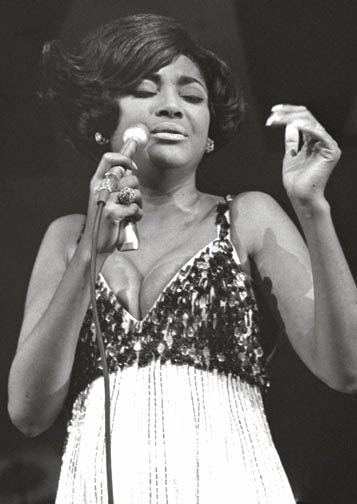
February 20, 1937, Nancy Wilson was the first of six children born to Olden Wilson (iron foundry worker) and Lillian Ryan (domestic worker) in Chillicothe, Ohio. Nancy's father would buy records to listen to at home. At an early age Nancy heard recordings from Billy Eckstine, Nat Cole, and Jimmy Scott with Lionel Hampton's Big Band. Nancy says: "The juke joint down on the block had a great jukebox and there I heard Dinah Washington, Ruth Brown, LaVerne Baker, Little Esther". Wilson became aware of her talent while singing in church choirs, imitating singers as a young child,and performing in her grandmother's house during summer visits. By the age of four, she knew she would eventually become a singer.
At the age of 15, while a student at West High School (Columbus, Ohio), she won a talent contest sponsored by local television station WTVN. The prize was an appearance on a twice-a-week television show, Skyline Melodies, which she ended up hosting. She also worked clubs on the east side and north side of Columbus, Ohio, from the age of 15 until she graduated from West High School, at age 17. Unsure of her future as an entertainer, she entered college to pursue teaching. She spent one year at Ohio's Central State College (now Central State University) before dropping out and following her original ambitions. She auditioned and won a spot with Rusty Bryant's Carolyn Club Big Band in 1956. She toured with them throughout Canada and the Midwest in 1956 to 1958. While in this group, Nancy made her first recording under Dots Records.
[From Wikipedia]
Nancy Wilson - Jazz Scene USA 1962 - Complete Show
When Nancy met Julian "Cannonball" Adderley, he suggested that she should move to New York City, believing that the big city would be the venue in which her career could bloom. In 1959, she relocated to New York with a goal of obtaining Cannonball’s manager John Levy as her manager and Capitol Records as her label. Within four weeks of her arrival in New York she got her first big break, a call to fill in for Irene Reid at "The Blue Morocco". The club booked Wilson on a permanent basis; she was singing four nights a week and working as a secretary for the New York Institute of Technology during the day. John Levy sent demos "Guess Who I Saw Today", "Sometimes I’m Happy", and two other songs to Capitol. Capitol Records signed her in 1960.
Nancy’s debut single, "Guess Who I Saw Today", was so successful that between April 1960 and July 1962 Capitol Records released five Nancy Wilson albums. Her first album, Like in Love, displayed her talent in Rhythm and Blues, with the hit R&B song "Save Your Love for Me." Adderley suggested that she should steer away from her original pop style and gear her music toward jazz and ballads. In 1962, they collaborated, producing the album Nancy Wilson and Cannonball Adderley, which propelled her to national prominence, and Wilson would later appear on Adderley's live album In Person (1968). Between March 1964 and June 1965, four of Wilson's albums hit the Top 10 on Billboard's Top LPs chart. In 1963 "Tell Me The Truth" became her first truly major hit, leading up to her performance at the Coconut Grove in 1964 – the turning point of her career, garnering critical acclaim from coast to coast. TIME said of her, "She is, all at once, both cool and sweet, both singer and storyteller." In 1964 Nancy released what became her most successful hit on the Billboard Hot 100 with "(You Don't Know) How Glad I Am", which peaked at No. 11. From 1963 to 1971 Wilson logged eleven songs on the Hot 100, including two Christmas singles. However, "Face It Girl, It's Over" was the only remaining non-Christmas song to crack the Top 40 for Wilson (#29, in 1968)
[From Wikipedia] NANCY WILSON - (YOU DON'T KNOW) HOW GLAD I AM
Nancy Wilson, The Emotions - Don't Ask My Neighbors
NANCY WILSON LIVE - GUESS WHO I SAW TODAY
After making numerous television guest appearances, Wilson eventually got her own series on NBC, The Nancy Wilson Show (1967–1968), which won an Emmy in 1975. Over the years she has appeared on many popular television shows from I Spy (more or less playing herself as a Las Vegas singer in the 1966 episode "Lori," and a similar character in the 1973 episode "The Confession" of The F.B.I. ), Room 222, Hawaii Five-O, Police Story, The Jack Paar Program, The Sammy Davis, Jr. Show (1966), The Danny Kaye Show, The Smothers Brothers Comedy Hour, Kraft Music Hall, The Sinbad Show, The Cosby Show, The Andy Williams Show, The Carol Burnett Show, Soul Food, New York Undercover, and recently Moesha, and The Parkers. She also appeared on The Ed Sullivan Show, The Merv Griffith Show, The Tonight Show, The Arsenio Hall Show and The Flip Wilson Show. She was in the 1993 Robert Townsend's The Meteor Man and in the film, The Big Score. She also appeared on The Lou Rawls Parade of Stars and the March of Dime Telethon. She was signed by Capitol records in the late 1970s and in an attempt to broaden her appeal she cut the album Life, Love and Harmony, an album of soulful, funky dance cuts that included the track "Sunshine", which was to become one of her most sought-after recordings (albeit among supporters of the rare soul scene with whom she would not usually register).
[From Wikipedia] Nancy Wilson (Someone to Watch Over Me)
Satin Doll / Count Basie Orchestra Live in Tokyo 1985
Wilson married her first husband, drummer Kenny Dennis, in 1960. In 1963, their son, Kenneth (Kacy) Dennis, Jr., was born, and by 1970, they divorced. On May 22, 1973, she married a Presbyterian minister, the Reverend Wiley Burton. She gave birth to Samantha Burton in 1975, and the couple adopted Sheryl Burton in 1976. As a result of her marriage, she abstained from performing in various venues, such as supper clubs. In this decade, she focused on her family, relocating to Pioneertown, California, to raise her children in a rural setting.
For the following two decades, she successfully juggled her personal life and her career. In November 1998, both of her parents died: she calls this year the most difficult of her life. In August 2006, Wilson was hospitalized with anemia and potassium deficiency, and was on I.V. sustenance while undergoing a complete battery of tests. She was unable to attend the UNCF Evening of Stars Tribute to Aretha Franklin and had to cancel an engagement. All of her other engagements were on hold, pending doctors’ reports for that month. In March 2008, she was hospitalized for lung complications, recovered and claimed to be doing well. In the same year, her husband, Wiley Burton, died after suffering from renal cancer.
Hazel Scott
By Karen Chilton
Smithsonian.com
Hazel Dorothy Scott was an internationally known, American jazz and classical pianist and singer; she also performed as herself in several films. She was prominent as a jazz singer throughout the 1930s and 1940s. Wikipedia
She began her career as a musical prodigy and ended up breaking down racial barriers in the recording and film industries
A Mix of Classical and Jazz
In a performance filmed for World War II soldiers, Hazel Scott begins with a Liszt's Hungarian Rhapsody #2 and ends with a jazzy tune.
Courtesy of: Army / Navy Screen Magazine
She was called the “Darling of Café Society” back in 1939 when New York City was alive with the sounds of swing. A sexy siren sitting bare-shouldered at the piano, Hazel Scott captivated audiences with her renditions of classical masterpieces by Chopin, Bach and Rachmaninoff. Nightly, crowds would gather at Café Society, New York’s first fully integrated nightclub, the epicenter of jazz and politics nestled in Greenwich Village, to hear the nineteen-year-old bronze beauty transform “Valse in D-Flat Major”, “Two Part Invention in A-Minor,” and “Hungarian Rhapsody No. 2” into highly syncopated sensations. “But where others murder the classics, Hazel Scott merely commits arson,” wrote TIME magazine. “Strange notes creep in, the melody is tortured with hints of boogie-woogie, until finally, happily, Hazel Scott surrenders to her worse nature and beats the keyboard into a rack of bones.”
Born in Port of Spain, Trinidad on June 11, 1920, Hazel Dorothy Scott was the only child of R. Thomas Scott, a West African scholar from Liverpool, England and Alma Long Scott, a classically-trained pianist and music teacher. A precocious child who discovered the piano at the age of 3, Hazel surprised everyone with her ability to play by ear. When she would scream with displeasure after one of Alma’s students hit a wrong note, no one in the household recognized the sensitive ear she possessed. “They had been amused, but no one regarded my urge as latent talent,” she recalled. Until one day, young Hazel made her way to the piano and began tapping out the church hymn, “Gentle Jesus”, a tune her grandmother Margaret sang to her daily at nap time. From that moment on, Alma shifted her focus from her own dreams of becoming a concert pianist, and dedicated herself to cultivating her daughter’s natural gift. They were a tight knit pair, sharing an extremely close bond throughout their lives. “She was the single biggest influence in my life,” Hazel said. Her father, on the other hand, would soon leave the family and have a very small presence in his daughter’s life.
Following the breakup of the Scott’s marriage, the three of them—mother, daughter and grandmother—would migrate to the States in search of greater opportunity for themselves and the gifted young pianist. In 1924, they headed to New York and landed in Harlem, where Alma took a job as a domestic maid.
She struggled, however, and returned to what she knew best—music. She taught herself the saxophone, and eventually joined Lil Hardin Armstrong’s orchestra in the early 1930s. Alma’s associations with well-known musicians made the Scott household “a mecca for musicians,” according to Hazel, who benefited from the guidance and tutelage of jazz greats Art Tatum, Lester Young and Fats Waller, all of whom she considered to be like family.
In 1928, Hazel auditioned for enrollment in the prestigious Juilliard School of Music. She was only eight-years-old, and too young for standard enrollment (students had to be at least 16), but because of some influential nudging by wealthy family friends and Alma’s sheer determination, Hazel was given a chance. Her performance of Rachmaninoff’s “Prelude in C-Sharp Minor” made a strong impression on staff professor Oscar Wagner. He proclaimed the child “a genius,” and with the permission of the school’s director, Walter Damrosch, offered her a special scholarship where he would teach her privately.
Career progress was swift. A spirited young woman with an outward demeanor that was effervescent and engaging, Hazel’s life was not that of an ordinary teenager. While still in high school, Hazel hosted her own radio show on WOR after winning a local competition, and performed gigs at night. At times, she felt burdened by the demands of her talent, admitting, “There were times when I thought that I just couldn't go on.” Still, she managed to graduate with honors from Wadleigh High. Not long after, she made her Broadway debut in the musical revue Sing Out the News. Commercial recordings of her ”Bach to Boogie” repertoire on the Signature and Decca labels would break sales records nationwide.
By the age of 16, Hazel Scott regularly performed for radio programs for the Mutual Broadcasting System, gaining a reputation as the “hot classicist.”[1] In the mid-1930s, she also performed at the Roseland Dance Hall with the Count Basie Orchestra. Her early musical theatre appearances in New York included the Cotton Club Revue of 1938, Sing Out the News and The Priorities of 1942.[1]
Throughout the 1930s and 1940s, Scott performed jazz, blues, ballads, popular (Broadway songs and boogie-woogie) and classical music in various nightclubs. From 1939 to 1943 she was a leading attraction at both the downtown and uptown branches of Café Society. Her performances created national prestige for the practice of “swinging the classics”
There was little separation between Hazel’s performance and her outspoken politics. She attributed it to being raised by very proud, strong-willed, independent-minded women. She was one of the first black entertainers to refuse to play before segregated audiences. Written in all her contracts was a standing clause that required forfeiture if there was a dividing line between the races. “Why would anyone come to hear me, a Negro, and refuse to sit beside someone just like me?,” she asked.
By the time Hollywood came calling, Hazel had achieved such stature that she could successfully challenge the studios’ treatment of black actors, demanding pay commensurate with her white counterparts, and refusing to play the subservient roles in which black actors were commonly cast. She would wear no maid uniforms or washer woman rags, and insisted that her name credit appear the same in all films: “Hazel Scott as Herself.” She performed in five major motion pictures in the early ‘40s, including I Dood It, directed by Vincente Minelli and featuring Lena Horne and the Gershwin biopic Rhapsody in Blue. But it was the on set of The Heat’s On starring Mae West that Hazel’s characteristic brashness was unleashed. In a scene where she played a WAC sergeant during WWII, Hazel was angered by the costumes the black actresses were given to wear. She complained that “no woman would see her sweetheart off to war wearing a dirty apron.” Takin' A Chance--Hazel Scott
Hazel promptly staged a strike that went on for three days, a battle that was finally rectified by removing the aprons from the scene altogether. The incident came at the cost of Hazel’s film career, which was short-lived as result of her defiance. "I've been brash all my life, and it's gotten me into a lot of trouble. But at the same time, speaking out has sustained me and given meaning to my life,” she said.
It was during these peak years of her career that Hazel began a romantic affair with the controversial Harlem preacher/politician, Adam Clayton Powell, Jr. who was making a bid for the U.S Congress. Twelve years her senior, married, and a reputed womanizer, Powell pursued her unabashedly. At first, she was annoyed by his advances, but eventually irritation gave way to real interest and passion. The couple began seeing each other in secret. Amidst a great deal of scandal, the couple married in August of 1945; she was the grande vedette of Café Society and he was the first black congressman from the East Coast. “They were stars, not only in the black world but the white world. That was extraordinary,” commented journalist Mike Wallace at the time.
As Hazel settled into domestic life in upstate New York, her career took a backseat to being a political wife and mother of their only son, Adam Clayton Powell III. She gave up nightclubs at Powell’s request and while he was away in Washington, she performed concert dates across the country.
In the summer of 1950, Hazel was offered an unprecedented opportunity by one of the early pioneers of commercial television, the DuMont network—she would become the first black performer to host her own nationally syndicated television show. As the solo star of the show, Hazel performed piano and vocals, often singing tunes in one of the seven languages she spoke. A review in Variety stated, “Hazel Scott has a neat little show in this modest package. Most engaging element in the air is the Scott personality, which is dignified, yet relaxed and versatile.”
But before she could fully enjoy her groundbreaking achievement, her name would appear in Red Channels, the unofficial list of suspected communists. Hazel’s association with Café Society (which was a suspected communist hangout) along with her civil rights efforts made her the target of the House Un-American Activities Committee (HUAC). Since she was neither a member of the Communist Party or a communist sympathizer, she requested to appear voluntarily before the committee despite her husband’s admonitions against it.
“It has never been my practice to choose the popular course,” she said. “When others lie as naturally as they breathe, I become frustrated and angry.” Her cogent testimony challenged the committee members, providing solid evidence contrary to their accusations. They had a list of nine organizations, all with communist ties, for whom she had performed. She only recognized one of the nine, the others she had never heard of. Yet, she explained that as an artist she was booked only to perform and rarely knew the political affiliations of the organizers who hired her. After hours of fierce questioning, she stated:
“…may I end with one request—and that is that your committee protect those Americans who have honestly, wholesomely, and unselfishly tried to perfect this country and make the guarantees in our Constitution live. The actors, musicians, artists, composers, and all of the men and women of the arts are eager and anxious to help, to serve. Our country needs us more today than ever before. We should not be written off by the vicious slanders of little and petty men.”
The entertainment community applauded her fortitude, but the government’s suspicions were enough to cause irreparable damage to her career. Weeks after the hearing, The Hazel Scott Show was canceled, and concert bookings became few and far between.
Around this same time, her marriage to Powell was crumbling under the weight of career demands, too much time apart, competitive jealousy and infidelity. After eleven years of marriage, the couple decided to part ways. Hazel sought refuge overseas. With her young son in tow, she joined the burgeoning black expatriate community in Paris. Hazel Scott in Rhapsody In Blue
Her apartment on the Right Bank became a regular hangout for other American entertainers living in Paris. James Baldwin, Lester Young, Mary Lou Williams, Dizzy Gillespie, and Max Roach were regular guests, along with musicians from the Ellington and Basie bands. Hazel’s music softened during the Paris years; she played more serene tunes with less and less of her old boogie-woogie style. On a brief visit to the States in 1955, she recorded Relaxed Piano Moods with Charlie Mingus and Max Roach on the Debut label, an album now considered by jazz critics and aficionados as one of the most important jazz recordings of the twentieth century. Most recently, it was inducted into National Public Radio’s Basic Jazz Record Library.
After a decade of living abroad, she would return to an American music scene that no longer valued what she had to offer. Replaced by rhythm & blues, the Motown sound and the British bands, jazz was no longer popular music, and Hazel Scott was no longer a bankable talent. Once the “darling of Café Society,” Hazel continued to perform, playing small clubs to a devoted fan base, perfecting her style and constantly exploring new ways of expressing herself musically. In October of 1981, she passed away from pancreatic cancer. Though she may not be as widely recognized as many of her contemporaries, her legacy as one of the pioneering women in entertainment endures.
What Ever Happened to Hazel Scott?
Hazel Scott plays Black & White AMAZING !
Hazel Scott for the March of Dimes
Hazel Scott in the Army(Hazel in Caisson Number)
Hazel Scott - Female Flying Fingers
Hazel Scott in 'Le désordre et la nuit (1958)
Karen Chilton is the author of Hazel Scott: The Pioneering Journey of a Jazz Pianist, from Café Society to Hollywood to HUAC.
Read more: http://www.smithsonianmag.com/arts-culture/Hazel-Scotts-Lifetime-of-High-Notes.html#ixzz2OnyEk95b
Follow us: @SmithsonianMag on Twitter
Esperanza Spalding Took on Bieber, Now Takes on Jazz
The innovative bassist and winner of the Smithsonian American Ingenuity Award for performing arts is taking jazz to a whole new place
By dream hampton Smithsonian magazine,
Esperanza Spalding, the 28-year-old bassist, composer and vocalist, is shushing her audience - many of whom have paid good money for the privilege. During the middle of her set at Chicago’s City Winery, a trendy restaurant and music venue, she holds the microphone close and admonishes: “Sssshh.” Her virtuoso bass playing and spellbinding vocals had the audience in the palm of her hand for the first half of her show. But an extended instrumental interlude showcasing her band has been marred by talking in the crowd. “I wanna hear them,” she tells her listeners, gesturing toward her 12-piece ensemble.
There’s nervous laughter from the audience. A woman near me indignantly objects that this is a supper club - but does so only in a whisper. The entire moment lasts no more than ten seconds. The audience immediately complies, obliging the performers with attentive silence.
In 2011, Spalding found herself onstage and on millions of television screens, collecting a Grammy Award in the Best New Artist category (and sending fans of pop post-teen sensation Justin Bieber, who lost out, into irate Twitter rants).
Her youth and beauty and progressive fashion-she accepted her Grammy in a deconstructed citron chiffon dress and a very intentional afro coaxed into a pompadour-were also an undeniable part of her appeal. Village Voice music critic Greg Tate calls Spalding the “sexiest and best thing to happen to jazz since Wynton.”
Her latest release at the time of the Grammy, Chamber Music Society, was actually her third album. She had already dazzled critics with her 2008 major-label debut, Esperanza, recorded when she was 23; it stayed on the Billboard jazz chart for 62 weeks, peaking at No. 3. In 2009, she performed twice at the White House and, at President Obama’s request, at the ceremony when he was awarded the Nobel Peace Prize in Oslo that year. “I wanted to offer something important from our culture, from our music,” she says. “It seemed significant to play jazz there.” (She donated the dress she wore to the Smithsonian National Museum of American History.)
Spalding went on to elicit praise for this year’s Radio Music Society, executed, according to Los Angeles Times music critic Chris Barton, “with disarming assurance.” The new album, wrote jazz critic Larry Blumenfeld in the Wall Street Journal, “celebrates sophisticated musical structures that ride accessible grooves.”
Her work is grounded in original compositions and performances moored artfully in jazz, but incorporating influences as varied as soul, Brazilian pop, funk, contemporary classical, blues and hip-hop. Spalding’s vocal compositions range from “Little Fly,” a William Blake poem set to music, to “Land of the Free,” based on the exoneration of Cornelius Dupree, recently released from prison after a wrongful conviction, and “Radio Song,” a paean to the serendipitous pleasure of discovering a song over the airwaves.
Legendary bass player Ron Carter, who collaborated with Miles Davis, helping him shift the music from bop to cool, says Spalding is “on the right track, she’s got a great voice and a great sound. I like the combination of her lyrics with the sound she gets from her bass. I can’t talk and play at the same time, let alone sing, so she’s a step ahead of me.” Electric bassist Meshell Ndegeocello-known for her own capacity to rap while she plays-is also impressed with the scope of Spalding’s gifts. “What makes her so phenomenal is she can speak so fluidly with her bass and her vocals.”
Spalding seems to have developed a healthy relationship with her still emerging fame. She’s often a tour headliner, as she is this evening in Chicago, where onstage she is radiant in a diaphanous ivory dress. In four-inch stilettos, she alternates between playing an electric bass and her mammoth upright bass. (Her website features a collection of dresses produced by designers concerned with creating sustainable couture.) “I feel like whenever I end up in some high-profile place like the Oscars or the Grammys, it’s a fluke,” she told me earlier that day. “I feel like I’m already there representing the underrepresented.” After answering typical red-carpet questions at those events about who she was wearing, she asked a friend to help her locate eco-friendly designers. “Since people are talking about fashion, I want them to also talk about the fact that there’s an alternative to sweatshops, synthetics and toxic dyes.”
Spalding is equally likely, however, to perform in a supporting role with someone like multi-instrumentalist Joe Lovano. She has given a great deal of thought to collaborative accomplishment. “There’s a cultural myth that’s rampant in the entertainment industry that minimizes collaboration, that overemphasizes soloists and stars and focuses on the individual,” Spalding says. “I don’t ever want to cater to that myth in our culture. Because, inevitably, there are people who aren’t written into history; you know, the teachers, all the teachers that Bird [Charlie Parker] studied with? The bands that he first started playing with? Aren’t they just as integral as his gift?” Esperanza Spalding Endangered Species
Spalding considers collaboration to be a kind of learning lab, where musical ideas and life philosophy are explored. “When I play with Terri Lyne Carrington or Geri Allen or even Prince, yes, what we’re doing musically is one element of what we’ve come together to do, but 95 percent of it is hanging around and talking about everything from buying a house to leading a rehearsal. I learn so much every day from those kinds of interactions.” Inside the music, where instrumentalists are communicating new ideas in the moment, she insists, innovations are still part of the larger group’s exchange. “Particularly in any music that revolves around improvisation, the magic and the beauty of it is that every night something new and different happens. Because we’re inviting the question ‘What will we do tonight?’ ‘What will we do right now?’”
At the same time, Spalding acknowledges that the individual creative process also sustains her. How and when does inspiration strike? “Something new, a melodic idea, will come to you,” she says. “You wonder, ‘Wow, where’d that come from?’” That is the moment, she adds, when it’s important to “stop and take notice.”
She and her older brother grew up with their mother, a single parent, in Portland, Oregon. Spalding dropped out of her magnet school at age 16 because high school, she says, “wasn’t so much about learning, it was about social programming, which can be fun, if you aspire to reign over the social strata of the school.” Eventually she completed her GED. When she wasn’t losing herself in a book, she volunteered at environmental conservation organizations or homeless shelters. “I got that from my mom, she’s a conscientious person,” Spalding says. “She doesn’t like the talking part but the doing part, which I appreciate.” Her bass teacher at the time encouraged her to audition for a scholarship at Portland State University. Later, she moved cross-country to Berklee College of Music in Boston.
She still seems to be discovering who she is onstage as the main attraction. In the tradition of the best blues women, she’s comfortable telling stories as preludes to songs. These conversational moments likely serve to help her audience, who may or may not be well versed in jazz, connect to the music. Spalding and backup singer Chris Turner in- voke the name of slain Florida teen- ager Trayvon Martin as they introduce the song “Black Gold,” her meditation on the hopes and fears of African-American boys. Before performing “Land of the Free,” she alludes to Dupree, who was incarcerated for decades before being cleared by DNA evidence. “I’m not 30 years old yet, I can’t wrap my head around...30 years in prison for a crime I didn’t commit.” She announces that part of her merchandise sales will be donated to the Innocence Project, the organization dedicated to exonerating the wrongfully convicted.
It’s the music that Spalding thinks most about. “An idea announces itself and it seems like there’s something meaningful to be found by exploring that idea,” she says of the imaginative habits that underlie her creation of original material. “It’s a process of sitting down over days, or hours, months, sometimes years, and trying to coax that idea into its full state of beingness.”
In that same way, she hopes to push jazz into the future. “I’m searching for the most beautiful version of ideas that I receive, leaving the windows open for influences outside jazz,” Spalding says. Ultimately, she adds, she aspires to “create an invitation to explore the music for a larger cross-section of listeners.” Esperanza Spalding "Crowned ; Kissed" - Jazz à Vienne 2012
ESPERANZA SPALDING RADIO MUSIC SOCIETY - Hold on me
Read more: http://www.smithsonianmag.com/arts-culture/Esperanza-Spalding-Took-on-Bieber-Now-Takes-on-Jazz-180008841.html#ixzz2Oni4IpPx
Follow us: @SmithsonianMag on Twitter
National Campaign for Justice
-
National Campaign for Justice
Lorenzo Salgado Araujo shot and killed by ICE agent in Houston, authorities
confirm:
Tell Harris Count...


 Born September 23, 1926 in Hamlet, North Carolina, John Coltrane was always surrounded by music.Coltrane grew up in High Point, North Carolina, his father played several instruments sparking Coltrane’s study of E-flat horn and clarinet. While in high school, (at about the age of 15) Coltrane’s musical influences shifted to the likes of Lester Young and Johnny Hodges prompting him to switch to alto saxophone. After moving to Philadelphia, he continued his musical training at Granoff Studios and the Ornstein School of Music. He was called to military service during WWII, where he performed in the U.S. Navy Band (1945-46) .
 After the war,he played alto saxophone in the bands led by Joe Webb and King Kolax, then changed to the tenor to work with Eddie "Cleanhead" Vinson (1947-48). He performed on either instrument as circumstances demanded while in groups led by Jimmy Heath, Howard McGhee, Dizzy Gillespie (with whom he made his first recording in 1949), Earl Bostic, and lesser-known rhythm-and-blues musicians, but by the time of his membership in Johnny Hodges's septet (1953-54) he was firmly committed to the tenor instrument. Coltrane began playing tenor saxophone with the Eddie "CleanHead" Vinson Band, and was later quoted as saying, "A wider area of listening opened up for me. There were many things that people like Hawk, and Ben and Tab Smith were doing in the ‘40’s that I didn’t understand, but that I felt emotionally." Prior to joining the Dizzy Gillespie band, Coltrane performed with Jimmy Heath where his passion for experimentation began to take shape. However, it was his work with the Miles Davis Quintet with Red Garland, Paul Chambers, and Philly Joe Jones (1955-57) that would lead to his own musical evolution. " Miles music gave me plenty of freedom," he once said. During that period, he became known for using the three-on-one chord approach, and what has been called the ‘sheets of sound,’ a method of playing multiple notes at one time.
 Coltrane next played in Thelonious Monk's quartet (July-December 1957), but owing to contractual conflicts took part in only one early recording session of this legendary group. He rejoined Davis and worked in various quintets and sextets with Cannonball Adderley, Bill Evans, Chambers, Jones, and others (1958-60). While with Davis he discovered the soprano saxophone, purchasing his own instrument in February 1960.
 Having led numerous studio sessions, established a reputation as a composer, and emerged as the leading tenor saxophonist in jazz, Coltrane was now prepared to form his own group; it made its debut at New York's Jazz Gallery in early May 1960. After briefly trying Steve Kuhn, Pete La Roca, and Billy Higgins, Coltrane hired two musicians who became longstanding members of his quartet, McCoy Tyner (1960-65) and Elvin Jones (1960-66); the third, Jimmy Garrison, joined in 1961. With these sidemen the quartet soon acquired an international following. At times Art Davis added a second double bass to the group; Eric Dolphy also served as an intermittent fifth member on bass clarinet, alto saxophone, and flute from 1961 to 1963,eventually adding players like Pharoah Sanders. The John Coltrane Quartet created some of the most innovative and expressive music in Jazz history including the hit albums: "My Favorite Things," "Africa Brass," " Impressions," " Giant Steps," and his monumental work "A Love Supreme" which attests to the power, glory, love, and greatness of God. Coltrane felt we must all make a conscious effort to effect positive change in the world, and that his music was an instrument to create positive thought patterns in the minds of people.
 In 1967, liver disease took Coltrane’s life leaving many to wonder what might have been. Yet decades after his departure his music can be heard in motion pictures, on television and radio. Recent film projects that have made references to Coltrane’s artistry in dialogue or musical compositions include, "Mr. Holland’s Opus", "The General’s Daughter", "Malcolm X", "Mo Better Blues", "Jerry McGuire", "White Night", "The Last Graduation", "Come Unto Thee", "Eyes On The Prize II" and "Four Little Girls". Also, popular television series such as "NYPD Blue", "The Cosby Show", "Day’s Of Our Lives", "Crime Stories" and "ER", have also relied on the beautiful melodies of this distinguished saxophonist.
 In 1972, "A Love Supreme" was certified gold by the RIAA for exceeding 500,000 units in Japan. This jazz classic and the classic album "My Favorite Things" were certified gold in the United States in 2001.In 1982, the RIAA posthumously awarded John Coltrane a Grammy Award of " Best Jazz Solo Performance" for the work on his album, "Bye Bye Blackbird". In 1997 he received the organizations highest honor, the Lifetime Achievement Award.


 Unsure of her future as an entertainer, she entered college to pursue teaching. She spent one year at Ohio's Central State College (now Central State University) before dropping out and following her original ambitions. She auditioned and won a spot with Rusty Bryant's Carolyn Club Big Band in 1956. She toured with them throughout Canada and the Midwest in 1956 to 1958. While in this group, Nancy made her first recording under Dots Records.



 Hazel Scott


 Posts
Posts