Thursday, October 23, 2025


Wednesday, October 22, 2025
Alice Coltrane - Song Of The Underground Railroad (Jazz Jamboree, 1987)
Howard Uni.-AFRO BLUE "NATURE BOY" - The Aeolians Oakwood University Alumni
Tuesday, July 8, 2025
Bayou Maharajah

In 1949, at age 9, Booker was struck by an ambulance in New Orleans, which he said was traveling about 70 miles an hour. According to him, it dragged him for 30 feet (9 metres) and broke his leg in eight places, nearly requiring its amputation. He was given morphine, which he later regarded as a cause of his eventual drug addiction. The accident left him with a permanent limp.
Booker received a saxophone for his 10th birthday in December 1949. He had asked for a trumpet, yet mastered the saxophone despite not having chosen it. But he focused on the piano, and by age 11 was performing blues and gospel organ every Sunday on the New Orleans radio station, WMRY (where his sister had performed). The following year was his last in classical instruction, when Booker learned the entire set of J.S. Bach's Inventions and Sinfonias, performing these at a professional level by age 12.
Rev. Jimmie Booker died in 1953, the year that Booker began high school at Xavier University Preparatory School on Magazine Street. Ellis Marsalis Jr. was band director at the school at the time, and noted the highly advanced quality of Booker's playing of Bach. Even as a working musician by his mid-teens, he excelled at Xavier, especially in math, music, and Spanish, and graduated in 1957. He aspired to become a Catholic priest, but ultimately gave up the idea, instead choosing to express his faith through music.

Monday, June 30, 2025
Monday, February 17, 2025
Wednesday, November 13, 2024
Sunday, November 19, 2023
Tuesday, November 9, 2021
Clora Bryant


Sunday, July 26, 2020
Cannonball Adderley - Live 1963
Cannonball Adderley - Alto Sax
Nat Adderley - Cornet
Yusef Lateef - Tenor Sax, Flute, Oboe
Joe Zawinul - Piano
Sam Jones - Bass
Luis Hayes - Drums
Music in this video
Learn more
Listen ad-free with YouTube Premium
Song
Jive Samba (Live)
Artist
The Cannonball Adderley Sextet
Album
Live in Lugano, 1963
Licensed to YouTube by
Believe Music (on behalf of Blue Velvet); BMI - Broadcast Music Inc., UMPI, Concord Music Publishing, and 7 Music Rights Societies
Song
Bohemia After Dark (Live)
Artist
The Cannonball Adderley Sextet
Album
Live in Lugano, 1963
Writers
Oscar Pettiford
Licensed to YouTube by
Believe Music (on behalf of Blue Velvet); UMPG Publishing, BMI - Broadcast Music Inc., and 5 Music Rights Societies
Song
Dizzy's Business (Live)
Artist
The Cannonball Adderley Sextet
Album
Live in Lugano, 1963
Licensed to YouTube by
Believe Music (on behalf of Blue Velvet); BMG Rights Management (US), LLC, ARESA, and 2 Music Rights Societies
Song
Trouble in Mind (Live)
Artist
The Cannonball Adderley Sextet
Album
Live in Lugano, 1963
Writers
Richard M. Jones
Licensed to YouTube by
Believe Music (on behalf of Blue Velvet); UMPI, UMPG Publishing, and 5 Music Rights Societies
Song
Work Song (Live)
Artist
The Cannonball Adderley Sextet
Album
Live in Lugano, 1963
Licensed to YouTube by
Believe Music (on behalf of Blue Velvet); UMPI, EMI Music Publishing, SOLAR Music Rights Management, BMI - Broadcast Music Inc., and 12 Music Rights Societies
Song
Unit Seven (Live)
Artist
The Cannonball Adderley Sextet
Album
Live in Lugano, 1963
Licensed to YouTube by
Believe Music (on behalf of Blue Velvet); EMI Music Publishing, ARESA, UMPI, BMI - Broadcast Music Inc., and 6 Music Rights Societies
Charles Mingus live 1964 - Jazz Icons DVD
Part 1:
Charles Mingus Bass
Eric Dolphy Alto Sax, Flute, Bass Clarinet
Clifford Jordan Tenor Sax
Jaki Byard Piano
Dannie Richmond Drums
Part 2:
Charles Mingus Bass
Eric Dolphy Alto Sax, Flute, Bass Clarinet
Clifford Jordan Tenor Sax
Johnny Coles Trumpet
Jaki Byard Piano
Dannie Richmond Drums
Tuesday, June 23, 2020
Wynton Marsalis

Wynton Marsalis
Wynton Marsalis is a trumpeter, composer, and Pulitzer Prizewinner. He’s also built himself a longtime reputation as a jazz purist, one who refuses to integrate music like avant-garde jazz or fusion into his work, which is otherwise immersed in the genre’s history.Talking to Marsalis about playing jazz during a time of massive racial unrest like what we’re seeing today. Marsalis responded that racism has less to do with the Charlottesville attack or even with Donald Trump’s election and more to do with “how we’ve lost our grip on our morality in the black community… using pornography and profanity and addressing ourselves in the lowest, most disrespectful form.”

Wynton Learson Marsalis is an American virtuoso trumpeter, composer, teacher, and artistic director of Jazz at Lincoln Center. He has promoted classical and jazz music, often to young audiences. Marsalis has won at least nine Grammy Awards, and his Blood on the Fields was the first jazz composition to win the Pulitzer Prize for Music. He is the only musician to win a Grammy Award in jazz and classical during the same year.
Marsalis was born in New Orleans, Louisiana, on October 18, 1961 and grew up in the suburb of Kenner. He is the second of six sons born to Dolores Ferdinand Marsalis and Ellis Marsalis Jr., a pianist and music teacher. He was named for jazz pianist Wynton Kelly. Branford Marsalis is his older brother and Jason Marsalis and Delfeayo Marsalis are younger. All three are jazz musicians. While sitting at a table with trumpeters Al Hirt, Miles Davis, and Clark Terry, his father jokingly suggested that he might as well get Wynton a trumpet, too. Hirt volunteered to give him one, so at the age of six Marsalis received his first trumpet.
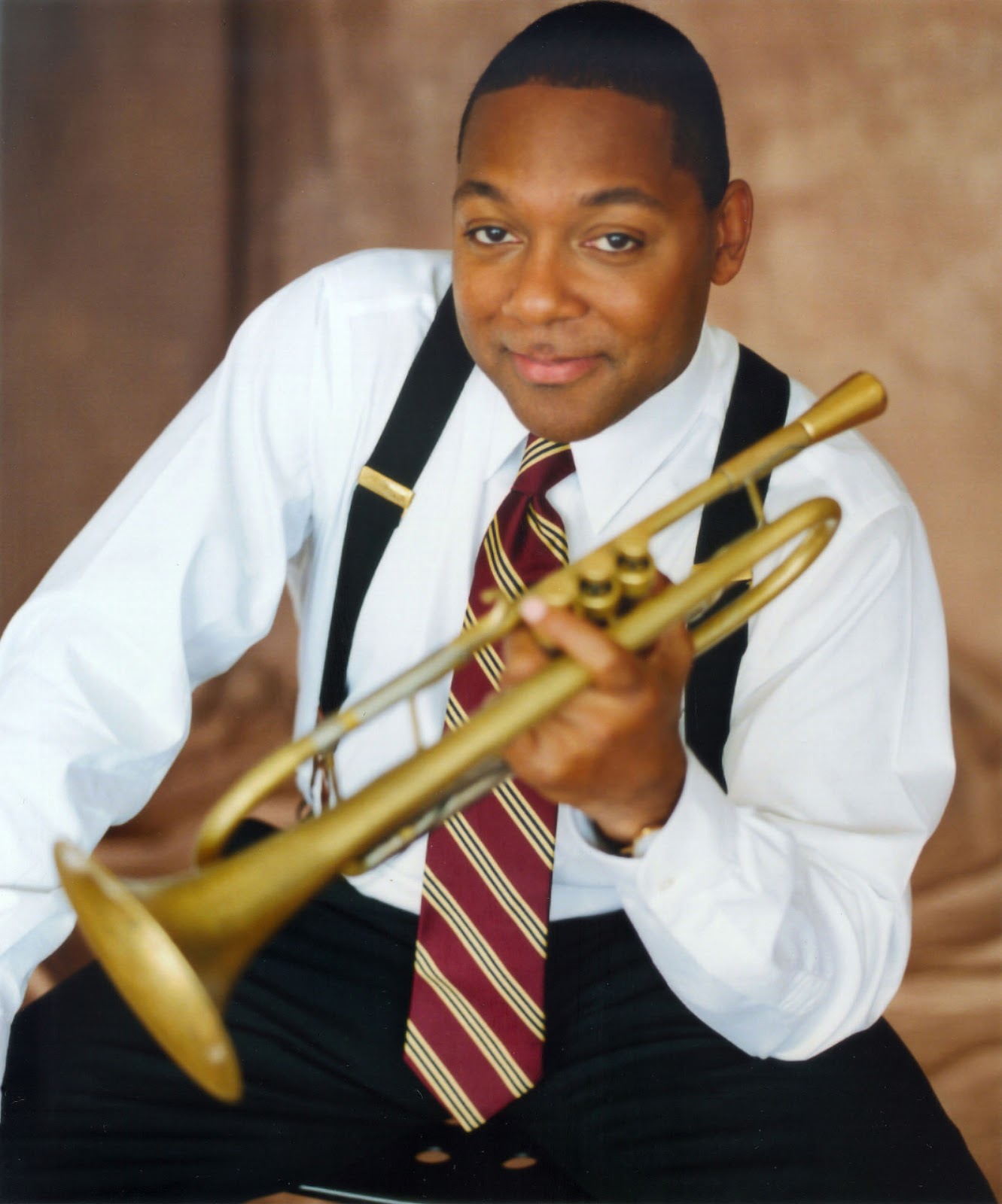
In 1979, he moved to New York City to attend Juilliard. He intended to pursue a career in classical music. In 1980 he toured Europe as a member of the Art Blakey big band, becoming a member of The Jazz Messengers and remaining with Blakey until 1982. He changed his mind about his career and turned to jazz. He has said that years of playing Blakey influenced his decision. He recorded for the first time with Blakey and one year later he went on tour with Herbie Hancock. After signing a contract with Columbia, he recorded his first solo album. In 1982 he established a quintet with his brother Branford Marsalis, Kenny Kirkland, Charnett Moffett, and Jeff "Tain" Watts. When Branford and Kenny Kirkland left three years later to record and tour with Sting, Marsalis formed another quartet, this time with Marcus Roberts on piano, Robert Hurst on double bass, and Watts on drums. After a while the band expanded to include Wessell Anderson, Wycliffe Gordon, Eric Reed, Herlin Riley, Reginald Veal, and Todd Williams.
When asked about influences on his playing style, he cites Duke Ellington, Miles Davis, Harry Sweets Edison, Clark Terry, Dizzy Gillespie, Jelly Roll Morton, Charlie Parker, Wayne Shorter, Thelonious Monk, Cootie Williams, Ray Nance, Maurice Andre, and Adolph Hofner.

Marsalis spent ten years touring continuously with his band. He has virtually single-handedly revived the public's interest in jazz, which to many had become a lost art form. In addition to performing, Marsalis also focuses strongly on education by giving lectures and workshops to students on musicianship.
Wynton Marsalis created the PBS TV series Marsalis on Music (1995), as well as the National Public Radio 26-week series "Making the Music" in that same year. Marsalis played a major role in developing Ken Burns's TV mini-series Jazz (2001). These efforts played a significant role in helping to bring jazz forward in the public's mind.
Marsalis has been criticized by some for discounting the value of jazz forms that have emerged after 1965. Marsalis has countered by stating that attempts at a musical fusion of jazz with other pop forms yields a mixture of sounds that are simply not true jazz.

Wynton Marsalis has made major efforts to help revive and restore his home city of New Orleans following the disaster of hurricane Katrina, including organizing the benefit concert "Higher Ground" at Lincoln Center in New York City. Marsalis has promoted human rights for the people of Burma and their imprisoned leader Aung San Suu Kyi. The Secretary-General of the United Nations has declared Marsalis to be a U.N. Messenger of Peace.

The Jazz at Lincoln Center Orchestra with Wynton Marsalis (JLCO) comprises 15 of the finest jazz soloists and ensemble players today. Led by Wynton Marsalis, Jazz at Lincoln Center Managing and Artistic Director, this remarkably versatile orchestra performs a vast repertoire ranging from original compositions and Jazz at Lincoln Center-commissioned works to rare historic compositions and masterworks by Duke Ellington, Count Basie, Fletcher Henderson, Thelonious Monk, Mary Lou Williams, Dizzy Gillespie, Benny Goodman, Charles Mingus, and many others. The JLCO has been the Jazz at Lincoln Center resident orchestra since 1988, performing and leading educational events in New York, across the United States, and around the globe.

Wynton Marsalis is an internationally acclaimed trumpeter, composer, bandleader and educator. He is the world’s first jazz artist to perform and compose across the full jazz spectrum, from its New Orleans roots to bebop to modern jazz. By creating and performing an expansive range of brilliant new music for quartets to big bands, chamber music ensembles to symphony orchestras, tap dance to ballet, Wynton has expanded the vocabulary for jazz and created a vital body of work that places him among the world’s finest musicians and composers.
Essentially Ellington 2020: Q&A with Wynton Marsalis and the Jazz at Lincoln Center Orchestra
Concert: Celebrating Dizzy Gillespie — Jazz at Lincoln Center Orchestra with Wynton Marsalis
Wynton Marsalis Plays Blue Note Jazz At Lincoln Center Orchestra 2015
Wynton Marsalis - Jazz in Marciac 2009
Wynton Marsalis - Live at the House of Tribes
Wynton Marsalis Haydn Trumpet Concerto
Baroque Duet - Kathleen Battle - Wynton Marsalis
Take Five - (Paul Desmond & Dave Brubeck) Sachal studios and Wynton Marsalis
Wynton Marsalis Classical
https://www.imdb.com/name/nm0550368/
https://en.wikipedia.org/wiki/Wynton_Marsalis
https://no1lyrics.com/artist/wynton-marsalis-42132/album
https://www.thetoptens.com/jazz-trumpet-players/
https://www.stereogum.com/1997383/wynton-marsalis-says-rap-is-more-damaging-than-a-statue-of-robert-e-lee/news/
https://ameliachambermusic.org/role-member/wynton-marsalis/
Monday, December 17, 2018
Nancy Wilson 2

Nancy Wilson
Famed singer Nancy Wilson died this past Thursday Dec.13,2018,at her home in Pioneertown, Calif. at the age of 81, Ms. Wilson had been ill for some time. Nancy Wilson was an American singer with more than 70 albums, and three Grammy Awards. She has been labeled a singer of blues, jazz, cabaret and pop; a "consummate actress"; and "the complete entertainer." The title she prefers, however, is song stylist. She has received many nicknames including "Sweet Nancy", "The Baby", "Fancy Miss Nancy" and "The Girl With the Honey-Coated Voice". “I have a gift for telling stories, making them seem larger than life,” she told The Los Angeles Times in 1993. “I love the vignette, the plays within the song.”
Per Wilson’s wishes, there will be no funeral. Her family will celebrate her life, most likely in February, her birth month.
She is survived by her three children and five grandchildren.

February 20, 1937, Nancy Wilson was the first of six children born to Olden Wilson (iron foundry worker) and Lillian Ryan (domestic worker) in Chillicothe, Ohio. Nancy's father would buy records to listen to at home. At an early age Nancy heard recordings from Billy Eckstine, Nat Cole, and Jimmy Scott with Lionel Hampton's Big Band. Nancy says: "The juke joint down on the block had a great jukebox and there I heard Dinah Washington, Ruth Brown, LaVerne Baker, Little Esther". Wilson became aware of her talent while singing in church choirs, imitating singers as a young child,and performing in her grandmother's house during summer visits. By the age of four, she knew she would eventually become a singer.
At the age of 15, while a student at West High School (Columbus, Ohio), she won a talent contest sponsored by local television station WTVN. The prize was an appearance on a twice-a-week television show, Skyline Melodies, which she ended up hosting. She also worked clubs on the east side and north side of Columbus, Ohio, from the age of 15 until she graduated from West High School, at age 17.
 Unsure of her future as an entertainer, she entered college to pursue teaching. She spent one year at Ohio's Central State College (now Central State University) before dropping out and following her original ambitions. She auditioned and won a spot with Rusty Bryant's Carolyn Club Big Band in 1956. She toured with them throughout Canada and the Midwest in 1956 to 1958. While in this group, Nancy made her first recording under Dots Records.
Nancy Wilson - Jazz Scene USA 1962 - Complete Show
When Nancy met Julian "Cannonball" Adderley, he suggested that she should move to New York City, believing that the big city would be the venue in which her career could bloom. In 1959, she relocated to New York with a goal of obtaining Cannonball’s manager John Levy as her manager and Capitol Records as her label. Within four weeks of her arrival in New York she got her first big break, a call to fill in for Irene Reid at "The Blue Morocco". The club booked Wilson on a permanent basis; she was singing four nights a week and working as a secretary for the New York Institute of Technology during the day. John Levy sent demos "Guess Who I Saw Today", "Sometimes I’m Happy", and two other songs to Capitol. Capitol Records signed her in 1960.

Nancy’s debut single, "Guess Who I Saw Today", was so successful that between April 1960 and July 1962 Capitol Records released five Nancy Wilson albums. Her first album, Like in Love, displayed her talent in Rhythm and Blues, with the hit R&B song "Save Your Love for Me." Adderley suggested that she should steer away from her original pop style and gear her music toward jazz and ballads.
In 1962, they collaborated, producing the album Nancy Wilson and Cannonball Adderley, which propelled her to national prominence, and Wilson would later appear on Adderley's live album In Person (1968). Between March 1964 and June 1965, four of Wilson's albums hit the Top 10 on Billboard's Top LPs chart.
In 1963 "Tell Me The Truth" became her first truly major hit, leading up to her performance at the Coconut Grove in 1964 – the turning point of her career, garnering critical acclaim from coast to coast. TIME said of her, "She is, all at once, both cool and sweet, both singer and storyteller." In 1964 Nancy released what became her most successful hit on the Billboard Hot 100 with "(You Don't Know) How Glad I Am", which peaked at No. 11. From 1963 to 1971 Wilson logged eleven songs on the Hot 100, including two Christmas singles. However, "Face It Girl, It's Over" was the only remaining non-Christmas song to crack the Top 40 for Wilson (#29, in 1968)
NANCY WILSON - (YOU DON'T KNOW) HOW GLAD I AM
Nancy Wilson, The Emotions - Don't Ask My Neighbors
NANCY WILSON LIVE - GUESS WHO I SAW TODAY

After making numerous television guest appearances, Wilson eventually got her own series on NBC, The Nancy Wilson Show (1967–1968), which won an Emmy in 1975. Over the years she has appeared on many popular television shows from I Spy (more or less playing herself as a Las Vegas singer in the 1966 episode "Lori," and a similar character in the 1973 episode "The Confession" of The F.B.I. ), Room 222, Hawaii Five-O, Police Story, The Jack Paar Program, The Sammy Davis, Jr. Show (1966), The Danny Kaye Show, The Smothers Brothers Comedy Hour, Kraft Music Hall, The Sinbad Show, The Cosby Show, The Andy Williams Show, The Carol Burnett Show, Soul Food, New York Undercover, and recently Moesha, and The Parkers. She also appeared on The Ed Sullivan Show, The Merv Griffith Show, The Tonight Show, The Arsenio Hall Show and The Flip Wilson Show. She was in the 1993 Robert Townsend's The Meteor Man and in the film, The Big Score. She also appeared on The Lou Rawls Parade of Stars and the March of Dime Telethon. She was signed by Capitol records in the late 1970s and in an attempt to broaden her appeal she cut the album Life, Love and Harmony, an album of soulful, funky dance cuts that included the track "Sunshine", which was to become one of her most sought-after recordings (albeit among supporters of the rare soul scene with whom she would not usually register).
Nancy Wilson (Someone to Watch Over Me)
Satin Doll / Count Basie Orchestra Live in Tokyo 1985
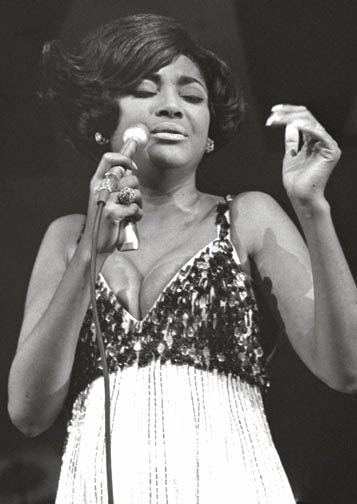
Wilson married her first husband, drummer Kenny Dennis, in 1960. In 1963, their son, Kenneth (Kacy) Dennis, Jr., was born, and by 1970, they divorced. On May 22, 1973, she married a Presbyterian minister, the Reverend Wiley Burton. She gave birth to Samantha Burton in 1975, and the couple adopted Sheryl Burton in 1976. As a result of her marriage, she abstained from performing in various venues, such as supper clubs. In this decade, she focused on her family, relocating to Pioneertown, California, to raise her children in a rural setting.
For the following two decades, she successfully juggled her personal life and her career. In November 1998, both of her parents died: she calls this year the most difficult of her life. In August 2006, Wilson was hospitalized with anemia and potassium deficiency, and was on I.V. sustenance while undergoing a complete battery of tests. She was unable to attend the UNCF Evening of Stars Tribute to Aretha Franklin and had to cancel an engagement. All of her other engagements were on hold, pending doctors’ reports for that month. In March 2008, she was hospitalized for lung complications, recovered and claimed to be doing well. In the same year, her husband, Wiley Burton, died after suffering from renal cancer.
Celebrate A Legend Nancy Wilson
Nancy Wilson Interview by Monk Rowe - 11/16/1995 - NYC


Nancy Wilson- "Forbidden Lover"
NANCY WILSON LIVE - I CAN'T MAKE YOU LOVE ME
Nancy Wilson - You Got the Move
https://en.wikipedia.org/wiki/Nancy_Wilson_(jazz_singer)
https://variety.com/2018/music/news/jazz-singer-nancy-wilson-dies-1203089722/
https://www.essence.com/celebrity/nancy-wilson-dead-at-81/
https://newsone.com/playlist/rest-in-peace-nancy-wilson-photos-videos/
https://www.usatoday.com/story/life/music/2018/12/13/nancy-wilson-grammy-winning-jazz-singer-dies-81/2308468002/
https://www.post-gazette.com/ae/music/2018/12/14/Nancy-Wilson-Dies-at-81-Jazz-Singer-Who-Turned-Songs-Into-Stories/stories/201812140084
https://www.nytimes.com/2018/12/14/obituaries/nancy-wilson-dead-jazz-singer.html


 Posts
Posts